

Switchboard Upgrade Cost in Australia: 2026 Price Guide
Most homeowners don't go looking for a switchboard upgrade. They find out they need one when an electrician shows up to install a new split-system air conditioner, wire in an EV charger, or trace a tripping circuit and says, "Your board isn't going to handle this." That conversation is more common than most people expect, and the switchboard upgrade cost can range from $900 to $8,000 or more depending on the job. Most people have no reference point for whether that quote is reasonable.
This guide breaks down what drives switchboard replacement cost in Australia, what a real quote actually contains, and how to reduce the final number before you sign anything. The numbers here reflect current market pricing across Sydney, Melbourne, Brisbane, Perth, and Adelaide, drawn from licensed electrician quotes and industry pricing data for 2025 and 2026. Whether you're planning ahead or responding to a surprise assessment, you'll leave with a clear picture of what to expect and what to push back on.
At Adapted Climate Electrical, we identify switchboard capacity issues regularly during air conditioning installation assessments. In our experience, it's one of the most common reasons a straightforward aircon job gets more complicated, and one of the smartest opportunities to bundle electrical work if you're already getting a licensed electrician on site.
What a switchboard upgrade actually costs in Australia in 2026
The hardware itself, the board unit alone, costs between $200 and $2,000 depending on capacity. But that figure doesn't tell the full story. By the time you add labour, safety switches, permits, and compliance certification, the total switchboard upgrade cost in Australia looks quite different. For most residential jobs, the realistic installed price falls between $900 and $4,500 for single-phase work, with three-phase upgrades pushing well above that.
Switchboard upgrade cost by amp rating
The most common residential amp ratings are 63A, 80A, 100A, and 3 phase 100a. A 80A upgrade, typically suited to smaller homes or apartments, costs approximately $800 to $1,600 fully installed depending on scope. A 100A upgrade for a standard three-bedroom home runs $1,200 to $2,000. For larger properties requiring 100A single-phase capacity, expect $2,700 to $4,500. Three-phase upgrades, increasingly necessary for homes running ducted systems, large EV chargers, or solar battery setups, start around $3,000 at the low end and can exceed $8,000 for complex installations.
ConfigurationTypical installed cost (AUD)
Small apartment (63A)$800 - $1,600
Small apartment (80A)$1,200 - $2,000
Standard 3-bedroom home (80A) $1,200 -$1,800
Large home, 100A single-phase $2,700 - $4,500
Large home, three-phase $3,000 - $8,000+
Switchboard upgrade cost by state
In Sydney, a standard residential switchboard upgrade runs $800 to $2,000, though complex work on older properties can reach $5,000. Melbourne sits slightly higher for standard jobs, typically $1,200 to $3,000 for small to medium homes, with large or heritage properties pushing $2,800 to $4,500 or more. Brisbane's typical range is $850 to $2,100, with complex projects reaching $4,000. Perth and Adelaide align broadly with the Sydney and Melbourne ranges, though specific pricing data for these cities is thinner, a local quote will serve you better than regional averages. For a practical breakdown of upgrade pricing from an Australian industry perspective, see DLG Electrical's guide to switchboard upgrade costs.
The regional differences come down to labour rates and council inspection requirements, not dramatic variation in materials. Sydney and Melbourne tend to sit at the higher end of the labour bracket because of trade demand, not because the work is fundamentally different.
The line items that make up your switchboard installation quote
Comparing quotes is difficult when you don't know what each line item represents. Two quotes at $1,600 and $2,200 can look like a $600 difference when they're actually describing entirely different scopes of work. Here's how a complete switchboard installation quote breaks down.
Materials: board, breakers, and safety switches
The core material cost covers the switchboard unit itself, circuit breakers, and RCD (residual current device) safety switches. Most residential homes need between 20 and 40 circuit breakers, which run $5 to $100 each depending on type and capacity. RCDs and safety switches typically come bundled at $100 to $500 total. Under AS/NZS 3000:2018, the national wiring standard, RCD protection is mandatory on all final sub-circuits in any new installation or upgrade. That means power points, lighting, air conditioning circuits, and fixed appliances all require coverage, any quote that doesn't include this isn't compliant.
Surge protection devices are sometimes included in materials and sometimes quoted as an add-on. Ask specifically whether they're standard in the build, because the answer varies between electricians and the
cost difference matters if you're comparing line by line.
Labour, permits, and disconnection fees
Licensed electricians in Australia charge $50 to $150 per hour depending on state and demand. A standard residential upgrade takes three to six hours, though complex jobs involving old wiring or access issues run longer. Permits, disconnection, and reconnection fees add a further $300 to $500 plus GST on top of labour and are non-negotiable for compliant, certifiable work. For a general itemised view of panel replacement costs and permit considerations, refer to HomeGuide's panel replacement cost guide.
The item most commonly omitted from low quotes is the mandatory compliance certificate, sometimes called an electrical safety certificate or certificate of compliance. This is issued after a council or network inspection confirms the work meets code. Always confirm in writing whether your quote includes this certification, because the cost and liability of uncertified work sit entirely with the property owner at resale.
Consumer mains and meter work
Consumer mains cable, which connects your property to the network distributor's supply point, may need upgrading but this is only needed when the existing mains wiring can not hold the capacity of new equipment. Not every upgrade triggers this, but if your home is older and the mains cabling is deteriorating, it becomes mandatory. Meter work is typically coordinated with your network distributor and bundled into the disconnection and reconnection fees rather than itemised separately on the electrician's invoice.
What pushes the price well beyond the base estimate
A straightforward fuse box upgrade on a modern home with accessible wiring is genuinely a $1,200 to $2,000 job. Several variables can push that number significantly higher, though, and most homeowners don't find out about them until the work is underway.
Old wiring and rewiring requirements
When an electrician opens up the wall or ceiling in a home built before the 1980s and finds deteriorating wiring, cloth-covered cables, or non-compliant cabling, the new board cannot be certified until the wiring issue is resolved. Partial rewiring, covering only the faulty circuits, adds $600 to $4,500 to the job. Full home rewiring adds $3,000 to $20,000 depending on home size and access difficulty. This is the single most common reason a switchboard upgrade quote comes back far higher than the homeowner expected.
Homes built before 1980 carry the highest risk of triggering this extra work. If you own an older property,
build in a meaningful contingency, for example $1,000 to $3,000 depending on the age and condition of your wiring, before the electrician arrives. For local Melbourne examples and case studies that illustrate how older wiring affects final pricing, see AJD Electrical's Melbourne switchboard cost breakdown.
Asbestos, access, and single vs. three-phase
Older switchboard enclosures sometimes contain asbestos backing boards. In most Australian states, licensed asbestos removal is required before electrical work can begin, adding $500 to $1,000 or more and requiring a separate contractor. This isn't something an electrician can absorb into the job, so ask about it upfront if your home was built before 1990.
Three-phase upgrades cost $1,700 to $4,200 more than equivalent single-phase work, driven by higher- capacity components, additional wiring for three-phase mains, and potential distributor fees. Three-phase is increasingly relevant for Australian homes running ducted air conditioning systems, large solar battery setups, or high-capacity EV chargers. If you're planning any of these in the next five years, discussing three-phase capacity now avoids paying for two separate upgrades later. For an Australian market perspective on typical upgrade ranges, consult the 2025 switchboard upgrade cost guide.
Adding circuits for aircon, EV chargers, or solar
Each new dedicated circuit adds $600 to $1,200 to the overall job. This is where the overall cost catches homeowners off guard most often. A new split-system air conditioner above 5kw capacity requires its own dedicated circuit. So does an EV charger. Solar inverters and battery systems each have specific requirements too. If your existing board is already at capacity, none of these can be added without an upgrade first.
At Adapted Climate Electrical, this is something we assess during every air conditioning installation quote. If the board can't safely accommodate the new load, we flag it before work begins rather than after, which is also the point where combining the two jobs saves the most on call-out costs and site mobilisation.
Why there's no government rebate and what to do instead
It's worth addressing this directly, because the question comes up often. There are no state or federal government rebates, grants, or concession programs in NSW, Victoria, or Queensland that specifically fund switchboard replacements. NSW's Energy Savings Scheme, Victoria's energy efficiency programs, and Queensland's rebate offerings all focus on energy efficiency upgrades: LED lighting, heat pumps, air conditioners, and batteries. Electrical infrastructure work like a switchboard upgrade is not an eligible activity under any current program.
Bill relief rebates such as the NSW Family Energy Rebate and the Seniors Energy Rebate reduce ongoing
electricity costs for eligible households but don't fund capital electrical work. A switchboard upgrade is an out-of-pocket expense, and waiting for a rebate that doesn't exist is not a strategy worth pursuing if the board is unsafe or undersized.
How to reduce what you actually pay
The most effective way to reduce your residential switchboard upgrade price is to bundle the work with other planned electrical jobs. If you're already getting a new air conditioner installed, a solar system connected, or an EV charger wired in, adding the switchboard upgrade to the same visit eliminates a second call-out fee, shared scaffold or access costs, and the second disconnection and reconnection fee. Bundling can save several hundred dollars on call-out, access, and reconnection fees alone, depending on job complexity.
Ask upfront whether the compliance certificate and disconnection fees are included in the quoted price, not added at invoice time.
If the quote includes optional upgrades like surge protection, ask what the cost is without them and decide separately rather than accepting the bundled price.
Get at least three quotes for any job over $1,500, the spread on a complex upgrade can exceed $1,000, and the cheapest isn't always the most complete.
How to get an accurate switchboard upgrade quote and
compare it confidently
The difference between a good quote and a misleading one often comes down to scope, not price. A quote that looks $400 cheaper may simply exclude the compliance certificate, the RCDs on lighting circuits, or the reconnection fee. Here's how to request and evaluate quotes so you're comparing equivalent work.
What to tell the electrician before they quote
Give the electrician your home's approximate age, size, and whether you know it's single or three-phase. Mention any new loads you're planning to add in the next two to three years, including air conditioning systems, EV chargers, or solar. This context changes the recommended amp rating and circuit count, so withholding it just means the quote may not fit your actual needs.
Ask three specific questions before accepting any quote: Does it include RCDs on all circuits as required under AS/NZS 3000? Does it include the compliance certificate? Does it include disconnection and reconnection fees? These are the three items most commonly excluded from low quotes, and asking for them explicitly forces a like-for-like comparison.
Reading a quote and spotting what's missing
A complete switchboard installation quote should itemise the board unit and breakers, safety switches and RCDs, labour hours, permit and inspection fees, and any consumer mains upgrade cost if the existing mains cabling needs replacement. If the quote is a single-line total with no breakdown, ask for the itemised version. You're entitled to understand what you're paying for, and any reputable electrician will provide it.
The spread between quotes on a complex upgrade can exceed $1,000. If one quote comes in significantly below the others, the most likely explanation is that something is missing, not that the electrician is more efficient. Check what's excluded before assuming it's a better deal.
Bottom line: what to budget and when to act
The switchboard upgrade cost for a residential property in Australia runs roughly $900 for a simple single- phase job on a modern home and climbs to $8,000 or more for a three-phase upgrade with rewiring requirements. The gap is wide because the variables are genuine: amp rating, circuit count, wiring condition, state-based labour rates, and whether asbestos or access complications are involved. Budgeting $1,500 to $2,500 for a straightforward residential job and holding a contingency for older properties is a reasonable starting point.
The most important thing you can do before signing a quote is confirm it includes RCDs on all circuits, the compliance certificate, and disconnection and reconnection fees. A low quote that excludes these items isn't cheaper, it's incomplete. The liability for non-compliant work sits with you, particularly at resale.
If you're already planning a new air conditioning system, solar connection, or EV charger, that's the right moment to raise the switchboard conversation. A licensed electrician will assess your board's capacity as part of any major electrical installation, and combining the work saves on costs you'd otherwise pay twice. If you'd like an assessment from a team that handles both the air conditioning and the electrical side under one roof, reach out to us at Adapted Climate Electrical. One visit covers both assessments, giving you a clear picture of exactly what your home needs.
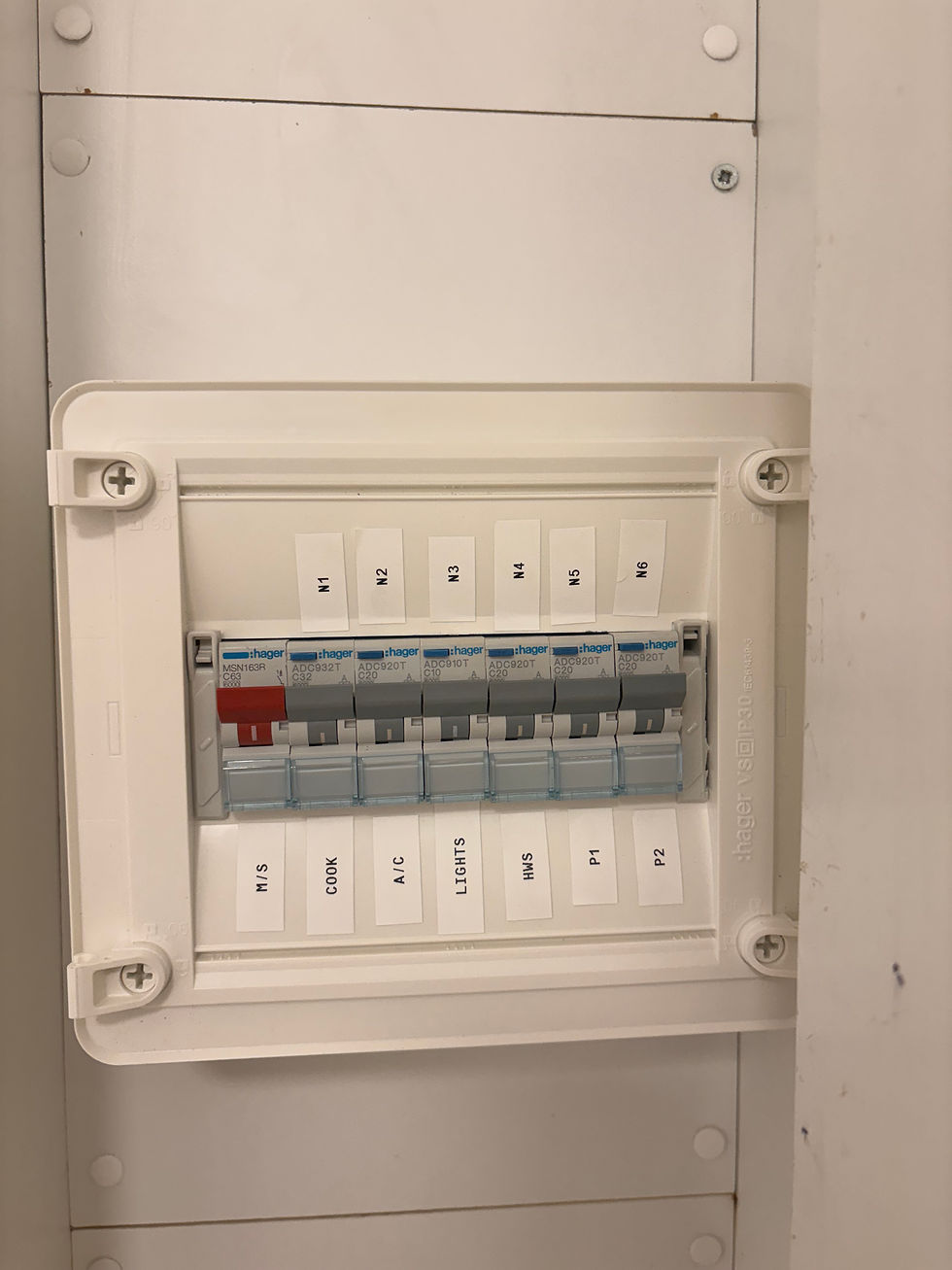
Finished upgrded switchborad for a unit complex

Comments